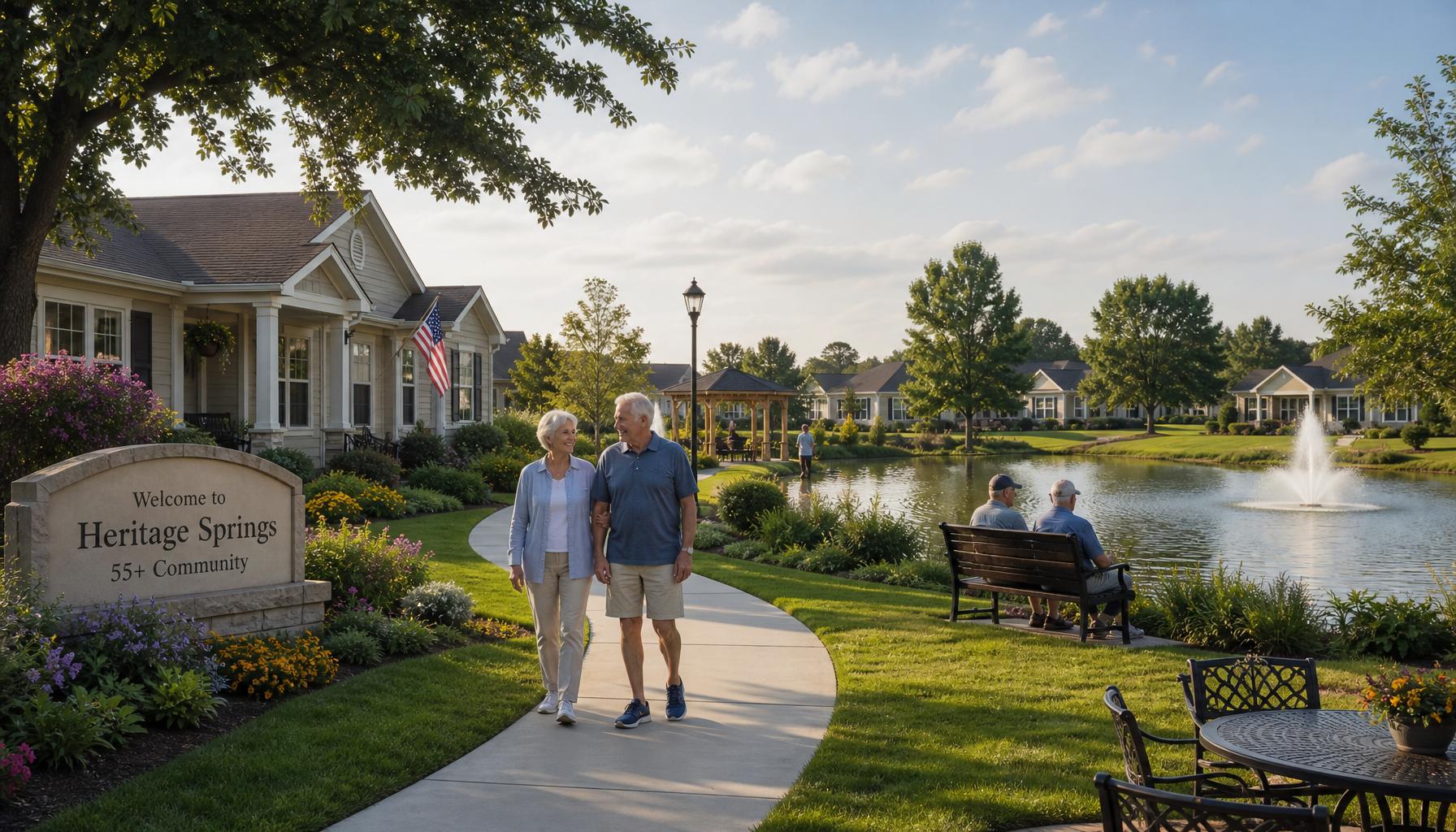
55+ communities, also referred to as senior living communities or retirement communities, offer distinctive features that make them uniquely suited to meet the needs and desires of the older adult population. These communities come with various elements that someone considering them should expect, understand, and evaluate before deciding to live in such a setting.
1. Age Restrictions: 55+ communities establish an age-minimum guideline for residents. At least 80% of homeowners must be 55 years or older in a household.
2. Maintenance-Free Living: These communities typically offer maintenance services that take care of tasks such as lawn care, home repairs, snow removal, and cleaning services. This feature reduces homeowners’ responsibilities and allows them to focus more on lifestyle activities.
3. Amenities & Facilities: 55+ communities feature a variety of amenities including recreational facilities, clubhouses, fitness centers, swimming pools, golf courses, walking trails, gardens, and often provide planned activities such as hobbies, crafts, and trips.
4. Social Environment: The community provides a built-in social network of peers of a similar age, which may lead to increased social interactions, a stronger sense of community, and reduced feelings of loneliness.
5. Accessibility & Safety: Homes and facilities in 55+ communities are often designed with accessibility, safety, and ease-of-use in mind. They frequently feature single-floor layouts, wider doorways, walk-in showers, and emergency alert systems.
6. Health & Wellness Services: Some communities offer health and wellness services like health clinics, healthcare professionals, wellness programs, and even assisted living or nursing facilities for those who may need additional care.
Before making a decision to join a 55+ community, factors to consider include:
1. Cost: Although many services and amenities are included, 55+ communities can be expensive. It’s crucial to understand both the upfront and ongoing costs, and whether they fit into your retirement budget.
2. Location: Is the community near your family, healthcare providers or in an area with a climate you’ll enjoy?
3. Lifestyle: Does the community support your lifestyle and interests? Does it offer the activities you enjoy?
4. Future Needs: While you may be active now, it’s important to consider whether the community will still be suitable if your health or mobility declines.
5. Rules and restrictions: Every community has its own set of rules residents are expected to abide by. For instance, some have severe restrictions on visits from grandchildren, or restrictions on pets.
6. Resale Value: While it might not be an immediate consideration, the resale value of your property could be crucial in your later years.
In sum, 55+ communities offer a unique, usually low-maintenance lifestyle with plentiful opportunities for social interactions and activities. However, they may not be right for everyone. It’s essential to visit several options, tour the facilities, speak with the residents, research the financial implications and consider your current lifestyle and possible future health needs before making a decision.